
A strong Instagram Reels hook helps the right viewer recognize a useful story. It does not need to shout or hide the answer behind a vague mystery. Before editing, complete this sentence: this video helps this person understand this specific thing. A tutorial about smoother cuts should show the editing problem quickly. A product demonstration should show the situation the product solves. These are different promises, so they need different openings.
Storytelling and structure
Reels Hooks and Audience Retention: Build an Opening That Pays Off
Why the opening needs a specific promise
Write three hooks before choosing one
Try a result opening, a problem opening and a demonstration opening. For an editing tutorial, those might be: watch this rough cut become easier to follow; this cut feels wrong because the action changes direction; or a direct before-and-after comparison. Keep the core footage and conclusion consistent while comparing openings. Otherwise you cannot tell whether the hook, subject or entire edit caused the difference. Avoid claims such as guaranteed views or instant growth.
Match the first image to the first sentence
If the voice promises a visual improvement, show the image being improved. A title alone asks the viewer to imagine the evidence. Place essential information where the interface is unlikely to cover it, then inspect the actual upload on a phone. The visual hook, spoken line and caption should point toward the same question. Three unrelated messages create extra work before the viewer understands why the video matters.
Build a short sequence with a real payoff
Use the diagram as a flexible sequence rather than a fixed timing formula. State the promise, show evidence, explain the useful detail and deliver the result. A ten-second demonstration may combine several stages; an educational Reel may need room for each. Cut repetition before accelerating speech. Speeding up every sentence can make an explanation harder to follow even when the total runtime falls. Leave a pause where the viewer needs to compare two images.
Read audience retention without guessing
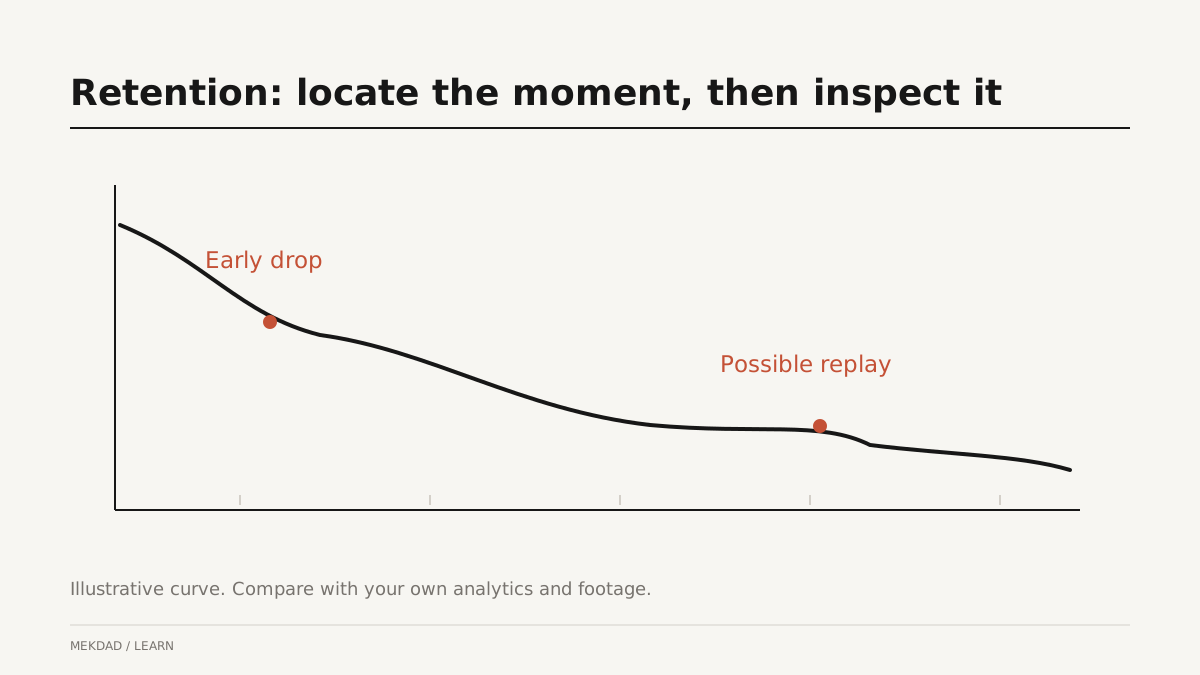
YouTube explains how its audience retention report helps identify moments that hold or lose viewers. Use the relevant analytics available on the platform where you publish. A drop near a long introduction suggests a place to inspect, not proof of a single cause. Replays may reflect interest or confusion. Compare videos with similar topics and distribution, and watch the actual moment before deciding what to change.
A practical editing experiment
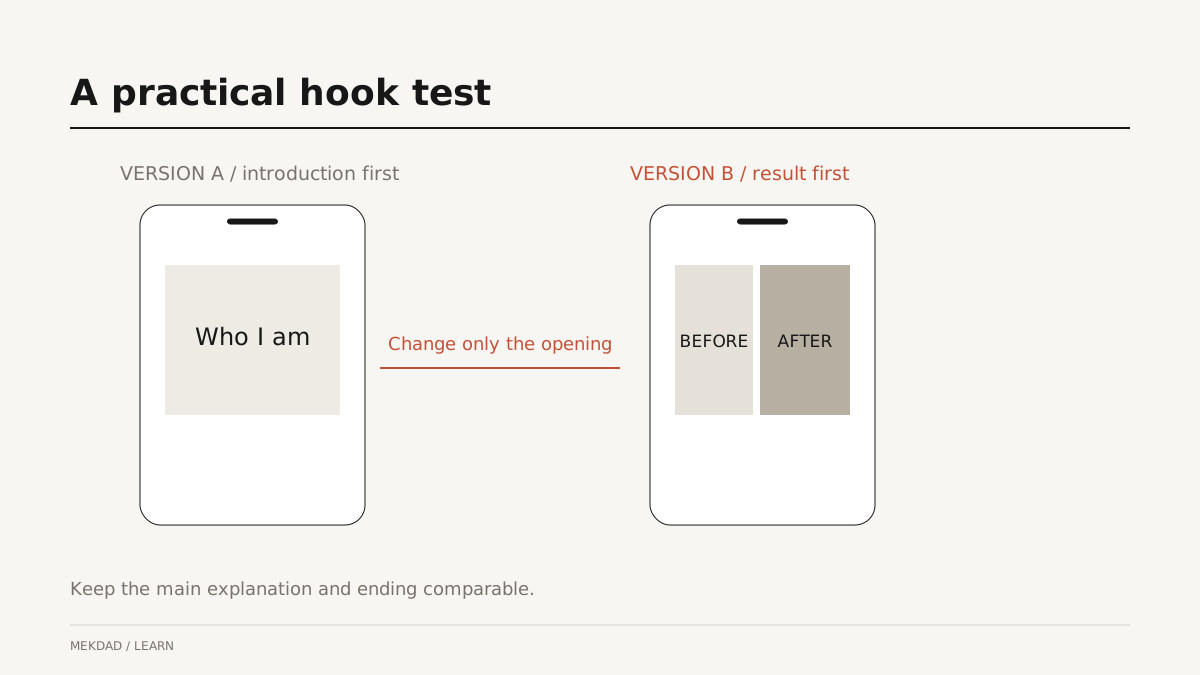
For an illustrative test, create two openings for the same tutorial. Version A introduces the creator before showing the result. Version B starts with the comparison and gives the introduction later if needed. Keep the main explanation and call to action similar. Record the version, date, audience source and available watch metrics. Treat one post as a clue rather than a final verdict: reach and viewer mix can differ even when the video is similar.
Common questions about Reels hooks
How long should a hook be? Long enough to make the subject and value clear; there is no universal number that fits every story. Do you need a cut every second? No: change the image when the explanation benefits. Can a quiet opening work? Yes, if the subject and tension are understandable. Should every hook ask a question? No; a useful result or an honest contrast can be equally clear.
Before you publish
Check that the ending answers the opening, captions remain readable and the sound supports the explanation. Then review the Reels export checklist. If several videos repeat the same topic, give each a different question to answer. A consistent series teaches viewers what to expect while letting you improve one editing decision at a time. Explore short-form editing options when planning that series.